The Importance of Having Home Gym Equipment
In today’s fast-paced environment, maintaining a consistent fitness routine can often be challenging. Individuals frequently face various barriers that can hinder their ability to visit a gym, such as time constraints, unfavorable weather conditions, and unexpected schedule conflicts. Consequently, having gym equipment at home has become increasingly crucial for those who wish to stay committed to their health and wellness goals.
One of the most significant advantages of possessing home gym equipment is the accessibility it provides. Rather than having to commute to a gym, individuals can exercise at their convenience, eliminating travel time and allowing for a workout to seamlessly fit into a busy schedule. This flexibility makes it easier to establish a consistent routine, ultimately aiding in the adherence to fitness programs. Whether it’s early in the morning, during a lunch break, or late at night, the convenience of having equipment readily available can motivate individuals to engage in physical activity more frequently.
Moreover, having the ability to work out at home alleviates many of the challenges posed by external factors. Bad weather can prevent individuals from going outside for a run or attending a gym class, but with home gym equipment, these barriers can be overcome. Individuals can complete workouts indoors regardless of the conditions outside. This consistent access to fitness tools can greatly improve one’s overall motivation and effectiveness in reaching personal health objectives.
Additionally, home gym equipment allows individuals to tailor their workouts according to personal preferences and fitness levels. This customization can lead to improved satisfaction with exercise regimes, as individuals can explore various routines and training methods without the pressure of maintaining a specific gym environment. By investing in home gym equipment, individuals are essentially taking a proactive approach to their health, ensuring they remain on track with their fitness goals, regardless of external circumstances.
Key Gym Equipment to Include in Your Home Setup
Establishing an effective home workout environment requires careful selection of gym equipment, tailored to individual fitness goals. Below is a detailed overview of essential items categorized by their primary use in the fitness journey.
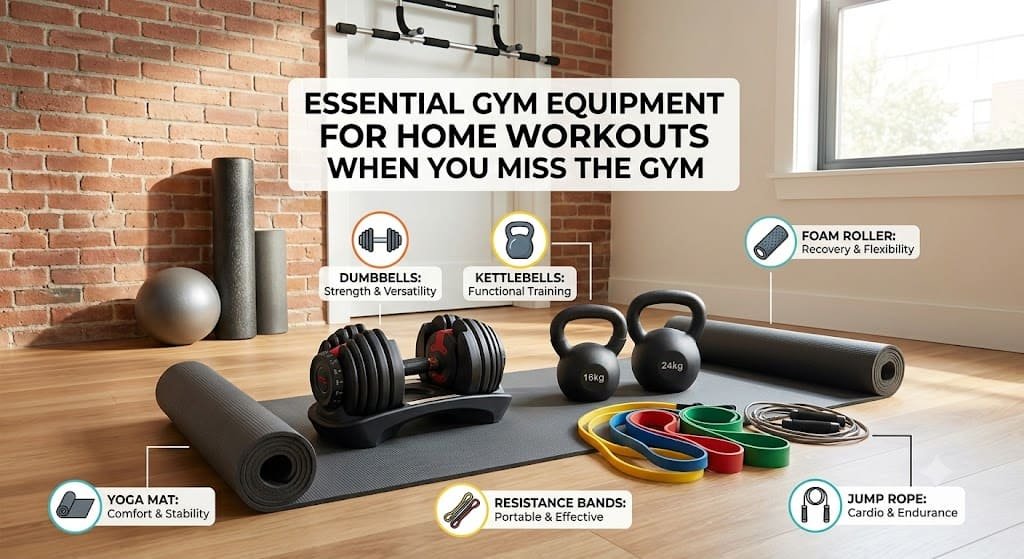
Strength Training: If your objective is to build strength, incorporating free weights is vital. Dumbbells and kettlebells, available in various weight options, facilitate a range of exercises targeting multiple muscle groups. Additionally, a set of resistance bands can be invaluable. These bands come in varying levels of resistance and enable users to perform exercises that enhance muscular strength without the need for bulky equipment.
Another essential item for strength training is a weight bench, which allows for safe and effective performance of exercises such as bench presses and tricep dips.
Cardiovascular Health: To support cardiovascular health, consider a stationary bike or a jump rope. A stationary bike provides a low-impact alternative for aerobic workouts, making it suitable for individuals with joint concerns. On the other hand, a jump rope is an inexpensive and versatile piece of equipment that can significantly improve cardiovascular fitness and coordination when incorporated into your routine.
Flexibility: Promoting flexibility is critical for a well-rounded fitness regime. A yoga mat is essential for providing comfort during stretching and yoga exercises, creating a designated space to enhance flexibility and core strength. It serves as a non-slip surface, allowing for safer movements during workouts focused on stretching and relaxation.
Compiling these essential gym equipment pieces—free weights, resistance bands, a stationary bike, and a yoga mat—into your home setup will provide a comprehensive foundation for home workouts. Each category ensures that various aspects of fitness, including strength, cardiovascular health, and flexibility, are systematically and effectively addressed.
Creating a Versatile Workout Space at Home
Establishing a workout space at home can significantly enhance your motivation and overall workout experience. The first step is choosing the right location in your home. Ideally, this space should be quiet, free from distractions, and large enough to accommodate your selected gym equipment. Consider spaces such as a spare room, basement, or even a garage as potential workout areas.
Once you have selected the location, organizing your equipment is paramount. Ensure that your equipment is easily accessible and arranged in a way that promotes efficient movement. For instance, if you use free weights, make sure they are within reach of your workout area. You might also want to invest in storage solutions that keep smaller items, like resistance bands and mats, neatly stored. This organization can streamline your workout routine, making it easier to transition from one exercise to another.
Incorporating elements that inspire and motivate you is also beneficial. Adding mirrors can help you monitor your form and progress, while adequate lighting ensures you can see and feel energized during workouts. Good ventilation is another crucial aspect; a space that is well-ventilated prevents discomfort and helps you maintain focus during high-intensity routines.
Furthermore, scheduling your home workouts is essential in establishing a routine. Setting designated times for exercise can help you prioritize your fitness goals amidst daily responsibilities. Involving family or friends can also foster motivation; inviting them to participate in workouts can turn exercise into a fun activity. Overall, the right location, organized equipment, motivational elements, and a consistent schedule can create a versatile workout space that encourages regular exercise from the comfort of your home.
Sample Workout Routines Using Home Equipment
Incorporating a variety of exercises into your home workout routine is essential for achieving balanced and effective results. The following sample workout routines are designed to accommodate different fitness levels: beginners, intermediate, and advanced. Each routine targets various muscle groups, ensuring a comprehensive fitness approach.
Beginner Routine: This routine aims to help those new to exercising feel comfortable and build confidence with home equipment. It includes:
- Bodyweight Squats: 3 sets of 10-12 reps
- Push-Ups (knee or standard): 3 sets of 8-10 reps
- Seated Dumbbell Shoulder Press: 3 sets of 10-12 reps
- Dumbbell Deadlifts: 3 sets of 10-12 reps
- Plank: 3 sets, holding for 20-30 seconds
Intermediate Routine: Designed for individuals with some experience, this routine introduces more intensity. The exercises include:
- Goblet Squats using a dumbbell: 4 sets of 12-15 reps
- Standard Push-Ups: 4 sets of 10-12 reps
- Dumbbell Bent-Over Rows: 4 sets of 10-12 reps
- Lateral Lunges: 4 sets of 10 reps (each side)
- Russian Twists with a moderate weight: 4 sets of 15 reps (each side)
Advanced Routine: For those seeking a high level of challenge, this routine incorporates advanced variations. It consists of:
- Single-Leg Deadlifts with heavy weights: 4 sets of 8-10 reps (each leg)
- Explosive Push-Ups or Clap Push-Ups: 4 sets of 6-8 reps
- Overhead Dumbbell Press: 4 sets of 8-10 reps
- Burpees: 4 sets of 10-12 reps
- Plank Variations (e.g., side plank, plank jacks): 4 sets, each holding for 30-45 seconds
As one progresses through these routines, it’s important to modify exercises as needed to match personal fitness levels and to prevent injuries. Mixing different types of workouts—strength training, cardiovascular, and flexibility exercises—will facilitate overall fitness improvement and keep routines engaging.